Scrollytelling · Autoethnography & Design Research · Solo
Above the Noise
A personal story about how a mass-produced object became personally significant, leading into a data-driven inquiry on gaming, identity, and refuge.
Solo thesis project. Designed, authored, modelled, and developed end to end as practice-based design research.
The live interactive scrollytelling artefact is the primary deliverable for this project. Scroll within the frame to explore the 12-scene progression, or open the deployment full screen.
Research Through Design and the 12-scene structure

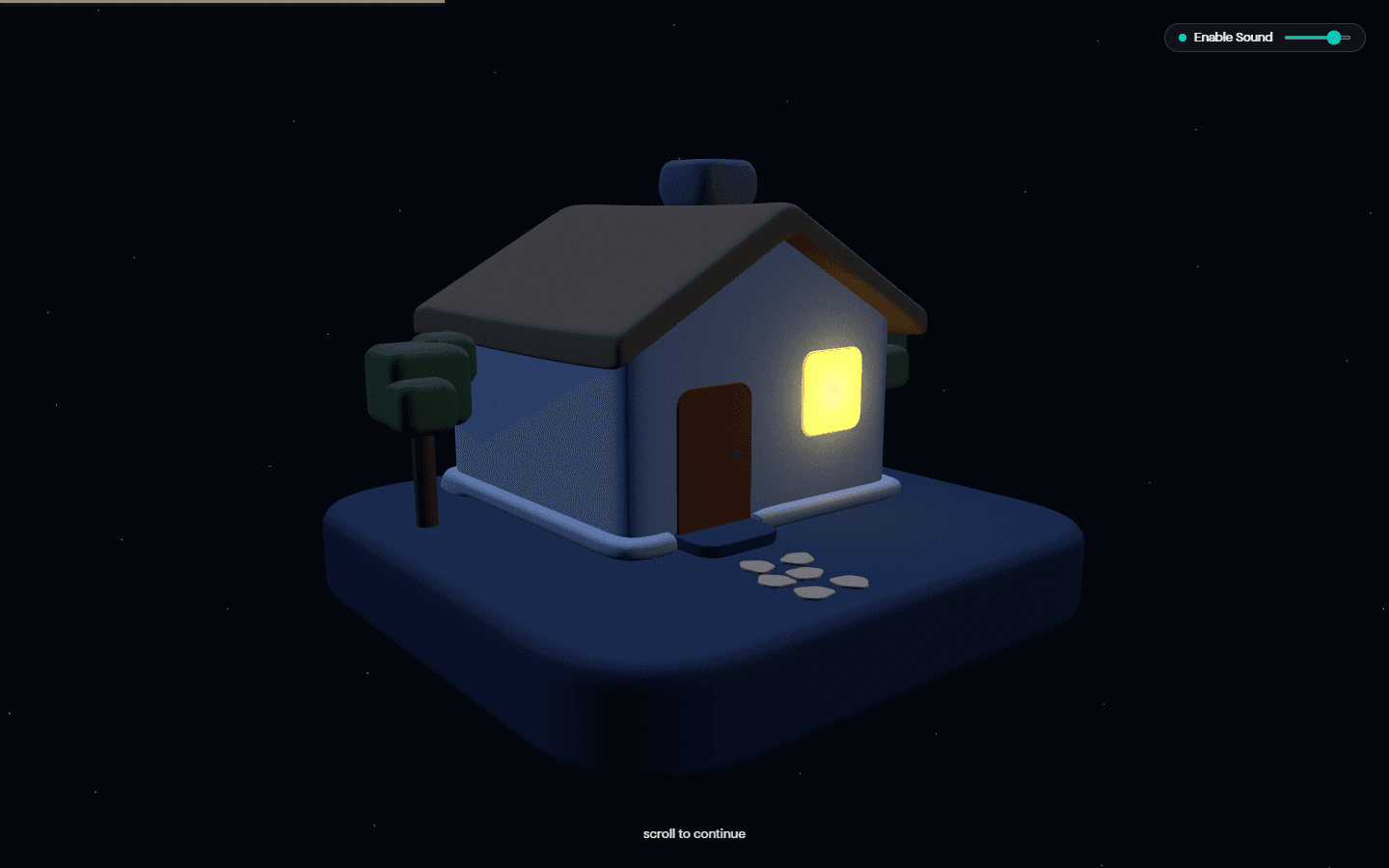
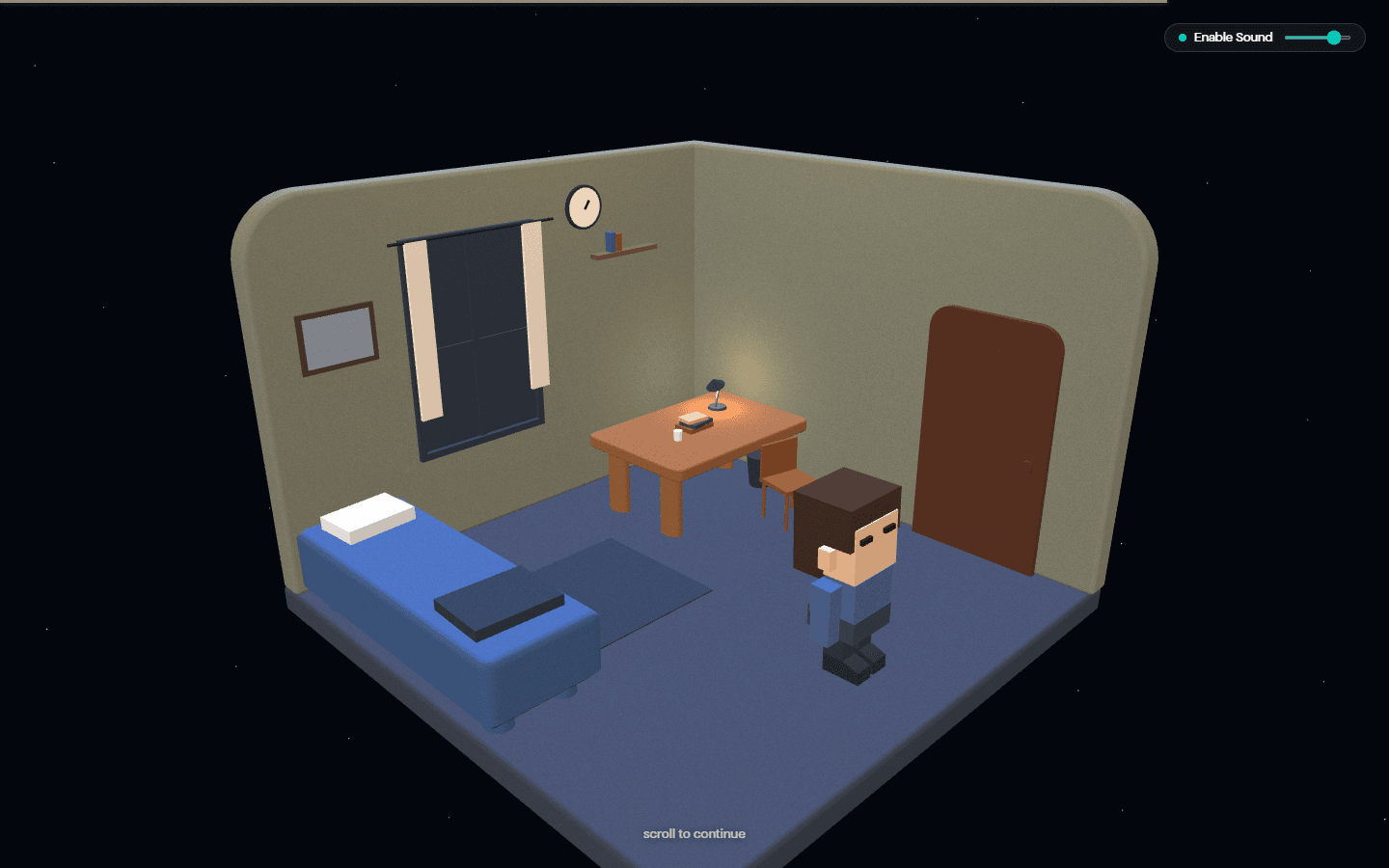
The project methodology combines autoethnography (Ellis, Adams and Bochner, 2011) with practice-based design research (Frayling, 1993's "research through design" — where the act of designing and building serves as inquiry itself, rather than an illustration of prior conclusions).
The interactive artefact is structured as a continuous scroll of twelve scenes. The experience moves progressively from an initial domestic environment through the growing prominence and intimacy of a recurring machine, arriving at a scene that deliberately breaks tone to compare the personal account against external data, before reaching its resolution.
The structural approach builds on precedents such as A Memoir Blue(a Master's thesis project using two visual registers for childhood memory versus present reflection) and Wu's Immersive 3D Story(a scroll-navigated cinematic biography using comparable WebGL spatial tools).
The materiality of three machines
The central thesis of the project argues that "the importance of the object to a child is not determined at the first meeting but is instead built up through use."
The narrative involves three materially different machines across the timespan covered. The visual language tracks this transformation, shifting from tangible physical hardware into a BIOS boot sequence and desktop navigation environment before expanding into an abstracted digital space.
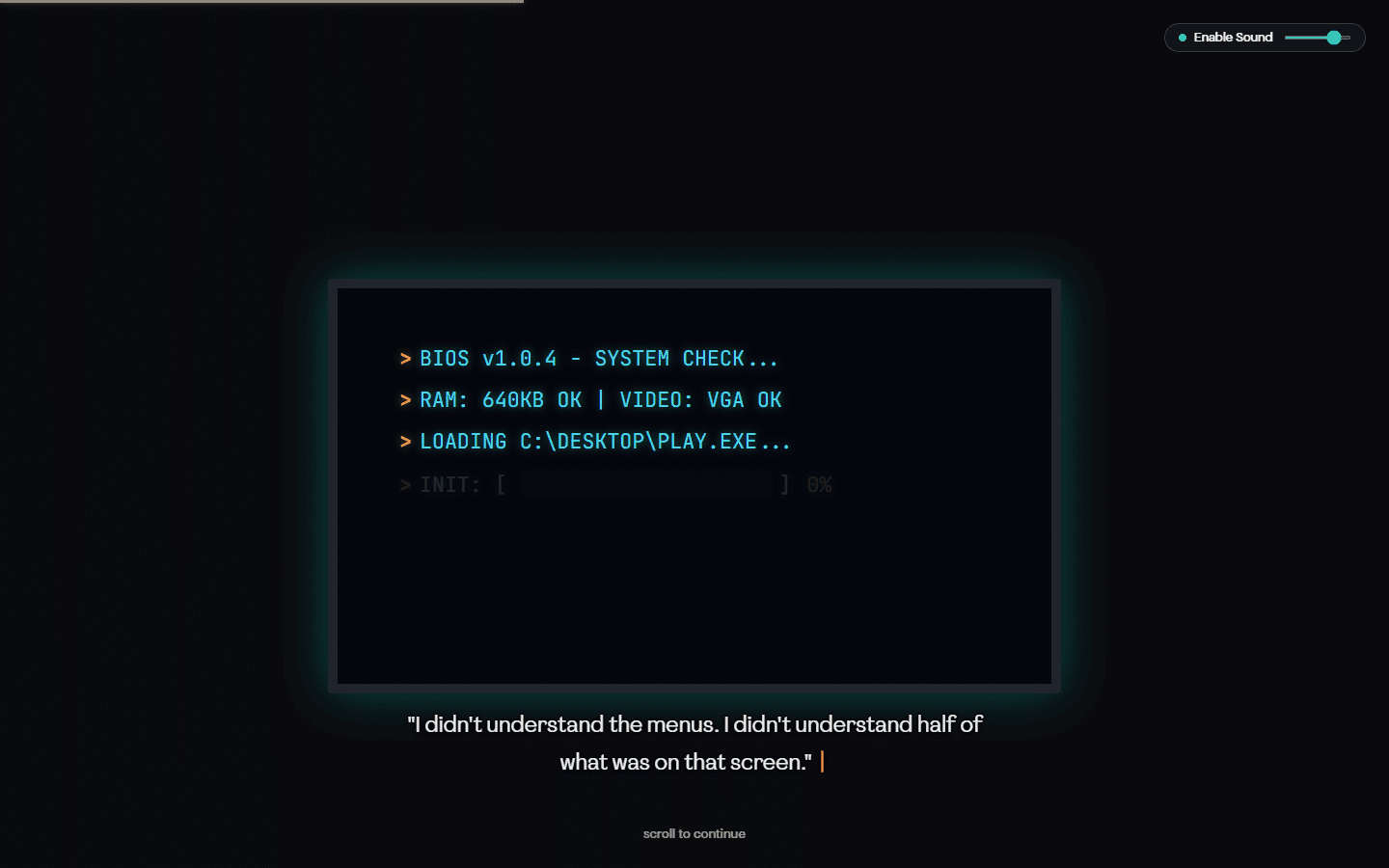
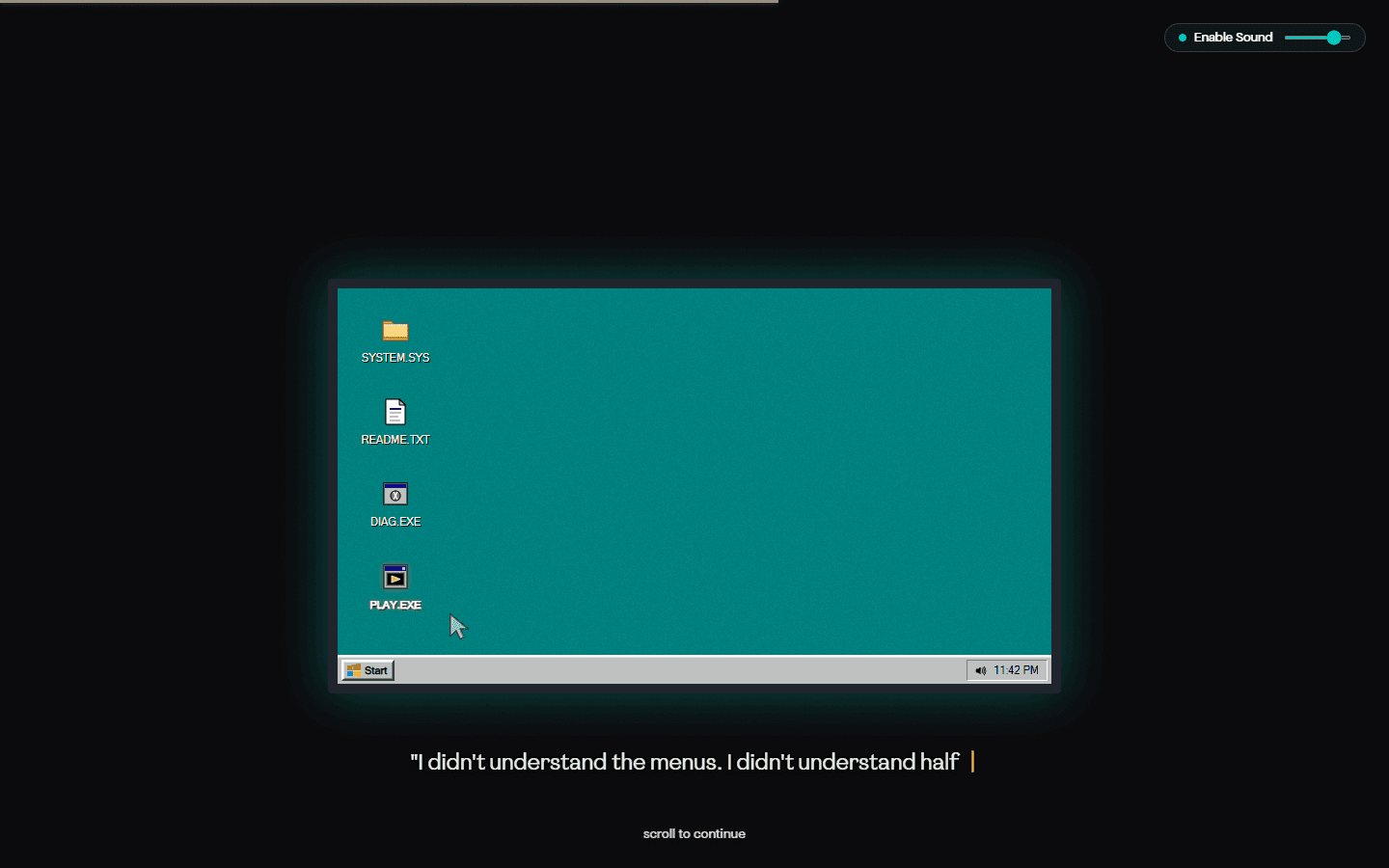
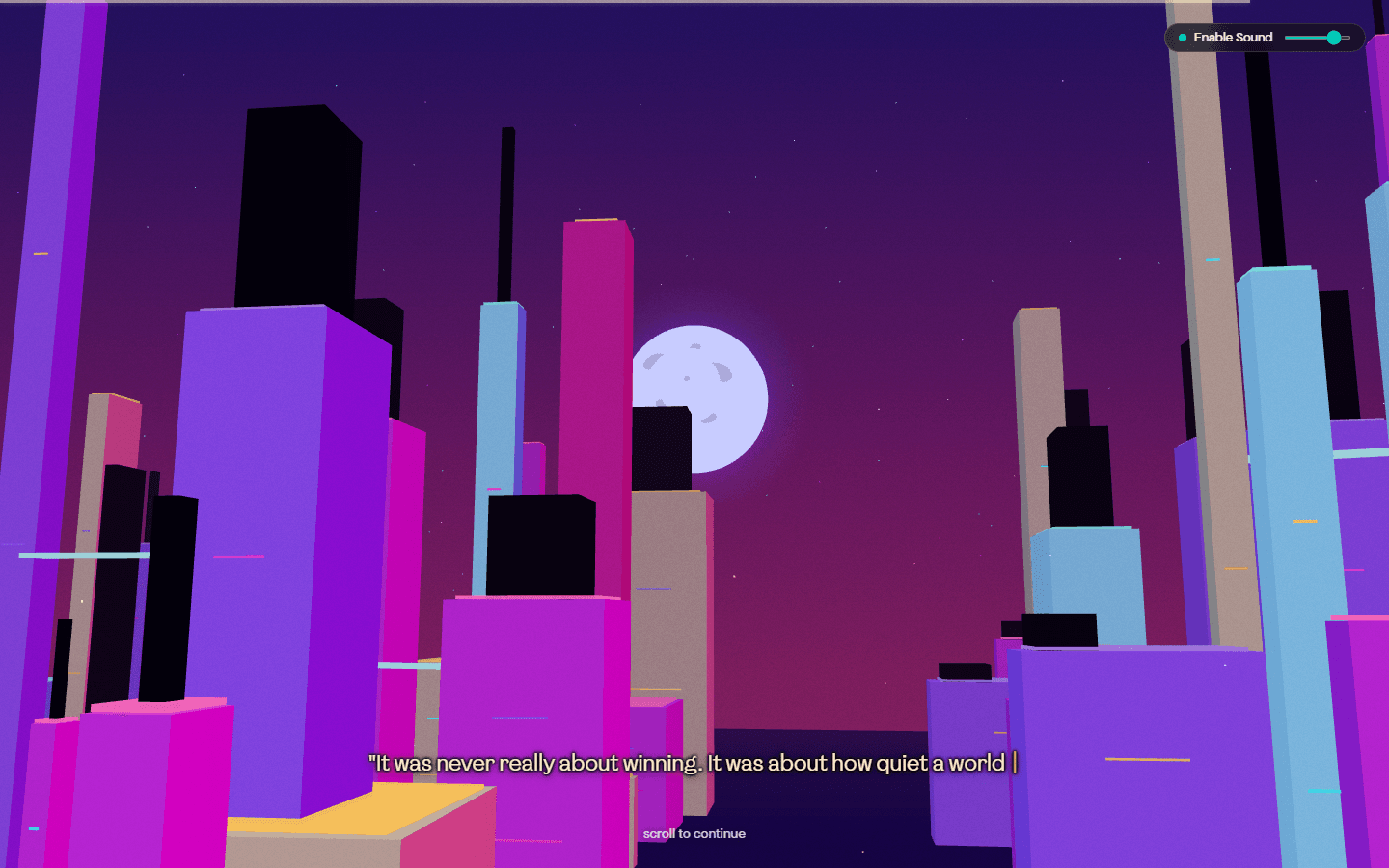
The tone break: Personal account to empirical data
The narrative deliberately ruptures tone in the later scenes, moving from a subjective autoethnographic recollection into a data-driven inquiry on gaming, identity, and psychological refuge.
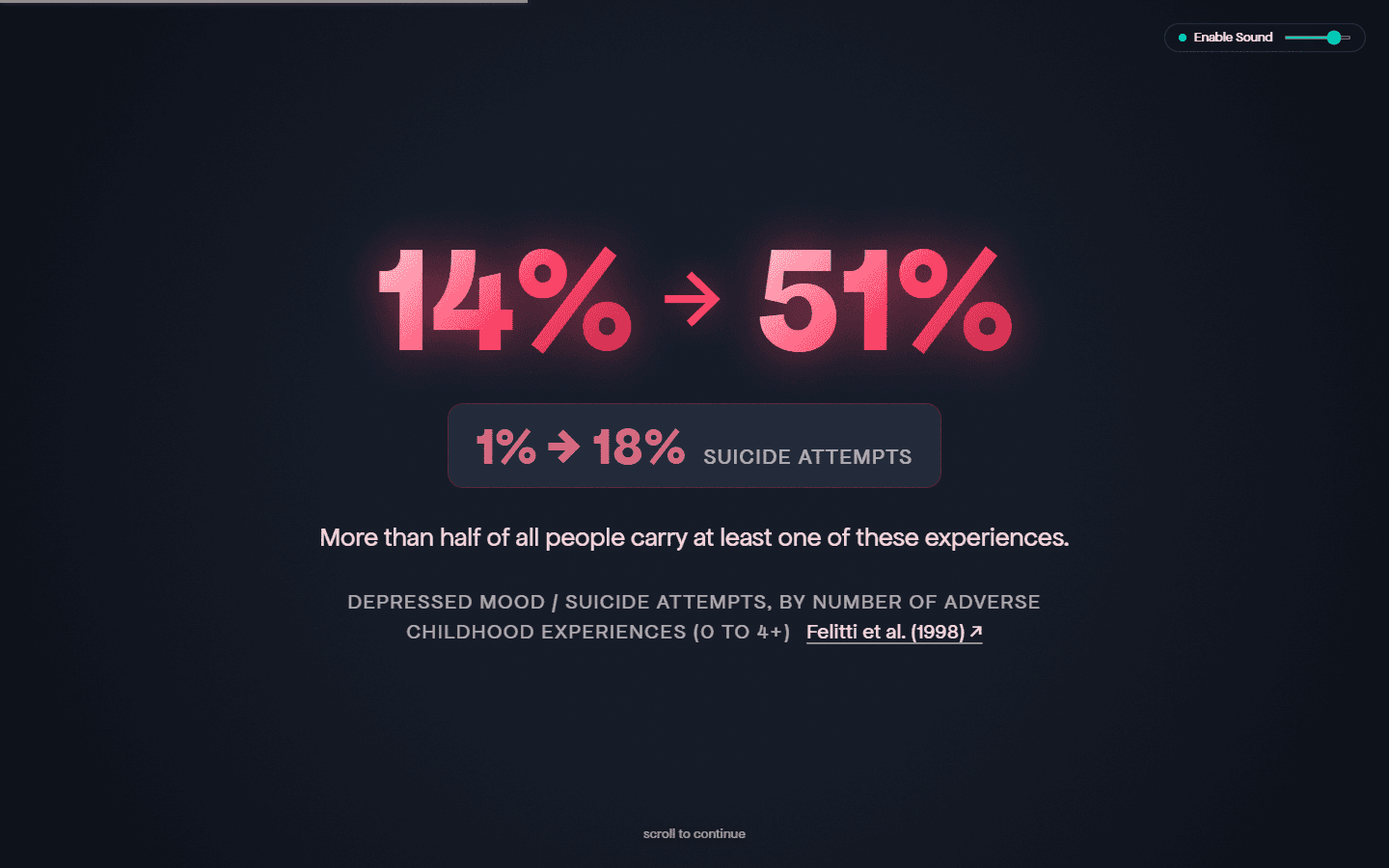
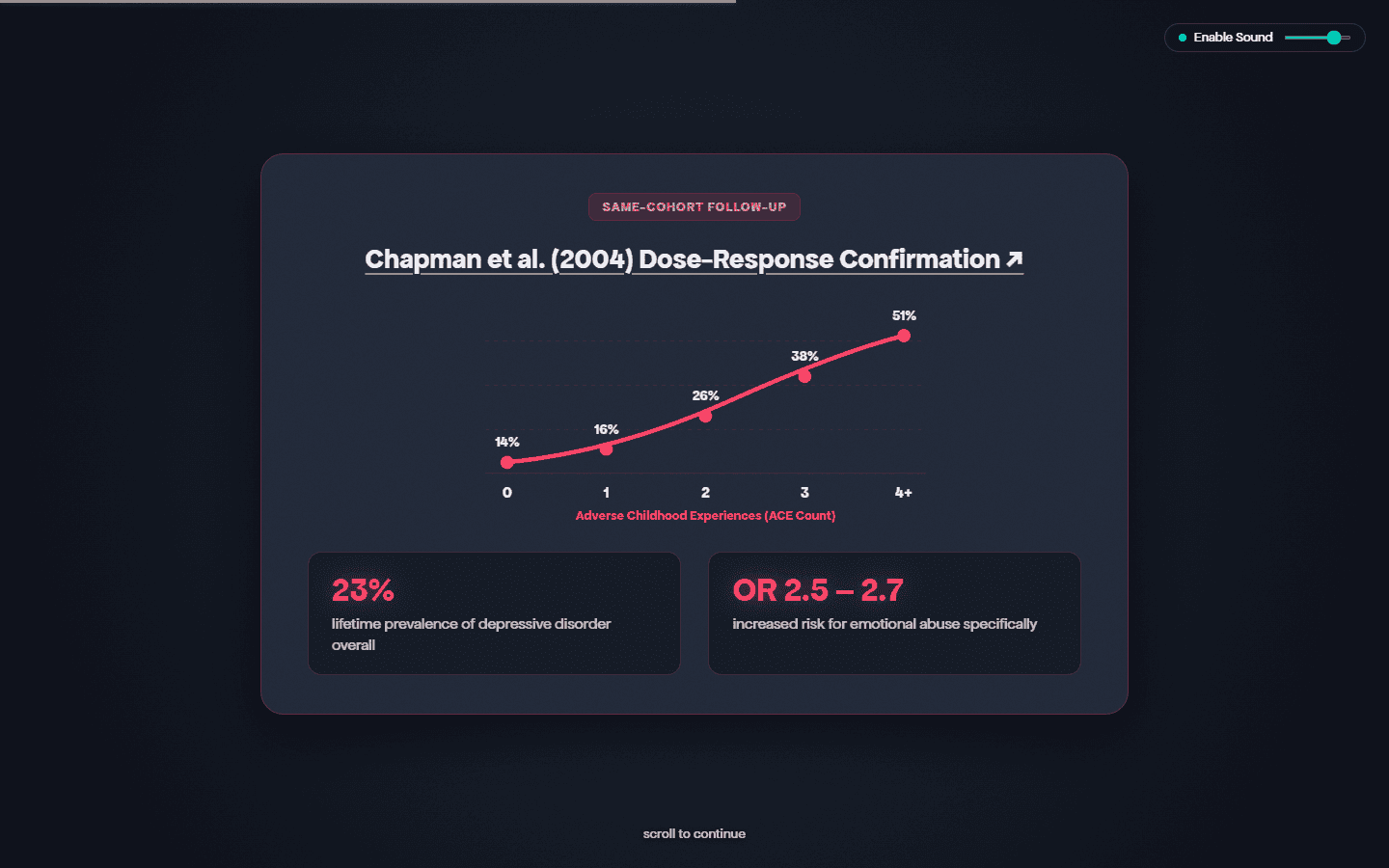
This section contextualizes the personal narrative against established literature on adverse childhood experiences, identity formation, and digital spaces as coping mechanisms (Felitti et al., 1998; Chapman et al., 2004; Erikson, 1968; Patrick & Noor, 2024; Zhou et al., 2023; Commodari et al., 2024).
Evaluation and outside viewer feedback
The project was evaluated against Zimmerman, Forlizzi and Evenson's (2007) four lenses for interaction-design research contribution: process, invention, relevance, and extensibility, with process serving as the primary claim (demonstrating that the making was documented rigorously enough for the reasoning to be verified).
A small round of outside viewer feedback was conducted specifically to test whether the private account communicates as intended to audiences without the researcher's personal context.
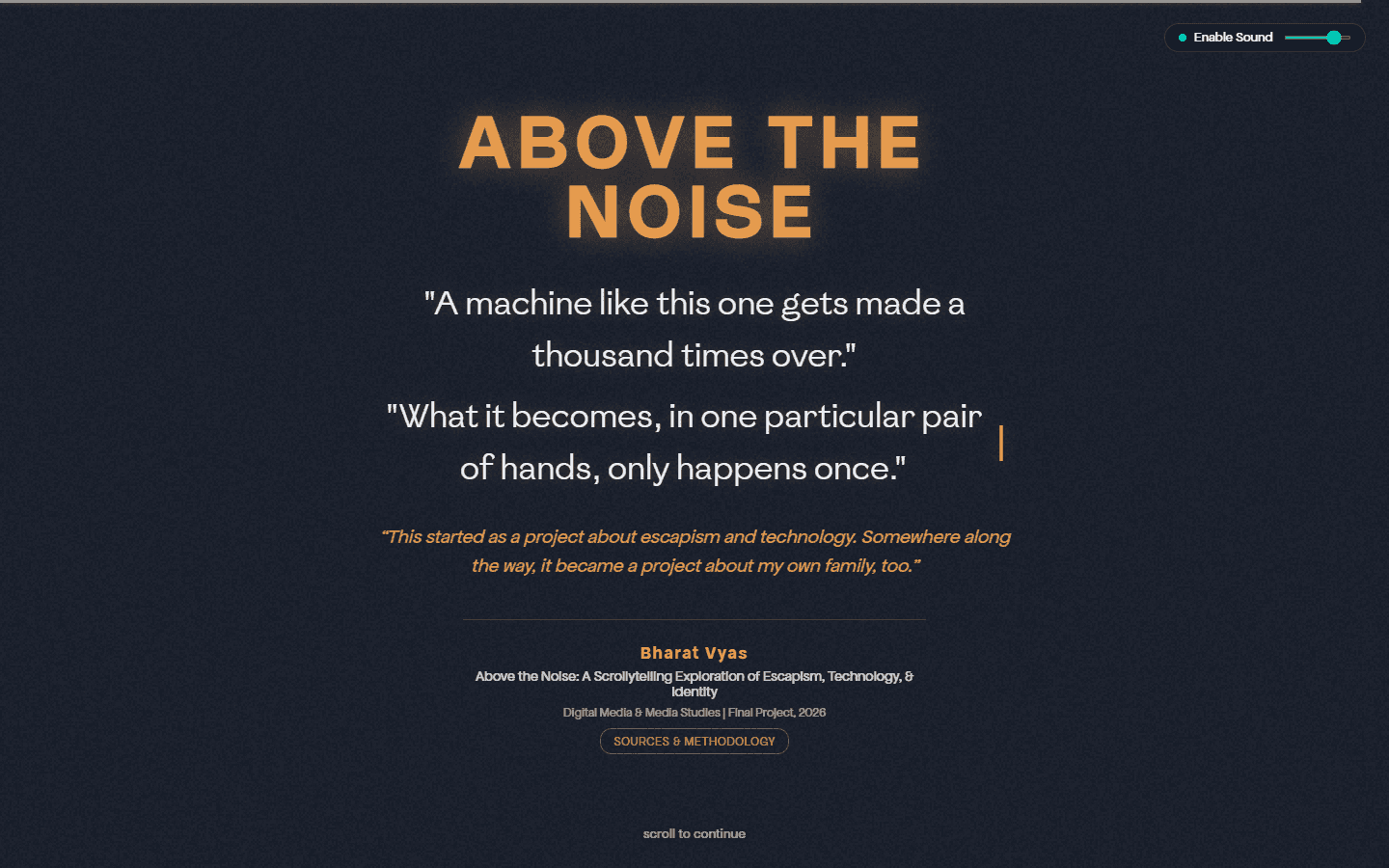
"This started as a project about escapism and technology. Somewhere along the way, it became a project about my own family, too."
Commodari, E. et al. (2024) Video gaming, emotional regulation, and psychological well-being.
Ellis, C., Adams, T.E. and Bochner, A.P. (2011) Autoethnography: An overview. Historical Social Research, 36(4), pp. 273–290.
Erikson, E.H. (1968) Identity: Youth and Crisis. New York: W.W. Norton & Company.
Felitti, V.J. et al. (1998) Relationship of childhood abuse and household dysfunction to many of the leading causes of death in adults: The Adverse Childhood Experiences (ACE) Study. American Journal of Preventive Medicine, 14(4), pp. 245–258.
Frayling, C. (1993) Research in art and design. Royal College of Art Research Papers, 1(1), pp. 1–5.
Patrick, R. and Noor, H. (2024) Digital spaces as psychological refuge: Media consumption and identity formation.
Zhou, Y. et al. (2023) Longitudinal analysis of digital media engagement and adolescent coping mechanisms.
Zimmerman, J., Forlizzi, J. and Evenson, S. (2007) Research through design as a method for interaction design research in HCI. Proceedings of the SIGCHI Conference on Human Factors in Computing Systems, pp. 493–502.